

Leave it Better
Your father served in the Army. How did growing up in a military family shape your worldview?
Moving frequently as part of a military family was one of the best parts of my childhood. I loved experiencing different countries and cultures. It taught me to be adaptable, open-minded and able to connect easily with new people. Those experiences helped me become comfortable with change, taught me to stay curious and gave me a global outlook that still shapes how I approach life and work. Most of all, it helped me see how connected people are, and gave me a deep appreciation for finding common ground wherever I am.
 You later served in the Peace Corps. What led you to pursue that path?
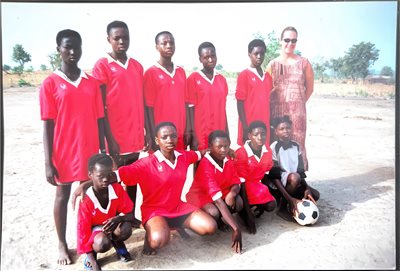
Growing up immersed in different cultures shaped my curiosity about the world and created a desire to serve others. Before graduate school, I wanted an opportunity to give back while deepening my awareness of the environmental challenges communities face globally. I served in Benin, a small country in West Africa, as an environmental volunteer, where I learned as much from my community as I hope I gave in return.
What lessons did you take away from your time in Benin?
I saw firsthand the importance of women’s empowerment—how investing in women can transform entire communities. I also came to appreciate the power of local, community-led solutions. The most sustainable progress always started within the community itself. Education was central to this. I watched mothers and children go to great lengths to attend school, showing how deeply they valued literacy and learning. How did your family’s military background and your Peace Corps service influence your approach to leadership?
Both experiences shaped my understanding of leadership as an act of service. In the Peace Corps, I learned the best leaders don’t just give directions—they listen, collaborate and work alongside others. I try to carry that forward, whether I’m mentoring new volunteers, sharing lessons I’ve learned or helping improve systems for future leaders. For me, leadership is about making things better for the people who come after you, not just accomplishing tasks yourself.What does Philanthropic Service to Others mean to you?
It means having a service-oriented mindset—decentering yourself and working to make a meaningful impact for others. It’s about leaving things better than you found them. That mindset has shaped my career in ecology and planetary health, where I focus on how changes to Earth’s systems affect both ecosystems and human health, particularly for the most vulnerable communities. I hope my work contributes to a future where people and the planet can thrive, just as I hope my volunteer efforts help ensure a thriving future for our Fraternity.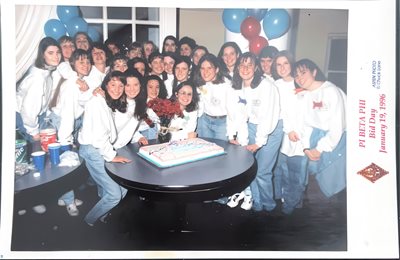 How has Pi Phi helped you navigate life transitions?
Pi Phi has been one of the most consistent communities in my life. I moved schools every year from fifth through 12th grade, so I never had a hometown community—and I’ve relocated a lot as an adult. Through it all, Pi Phi has always been there. Volunteering keeps me connected to our sisterhood, even when I’m in an area with fewer Pi Phis. Knowing I have Pi Phi in my life makes moving easier and reminds me I’m part of a massive network, no matter where I am.
What motivates you to stay involved as a volunteer?
I love staying involved with Pi Phi because it allows me to give back to a sisterhood that’s given me so much. In many ways, it mirrors my Peace Corps experience—it's helped me see Pi Phi from a much broader perspective than just my collegiate chapter. Building friendships with sisters across generations is also incredibly rewarding.
How has volunteering with Pi Phi helped you grow personally and professionally?
Volunteering has been a supportive space to grow my leadership and change management skills. I’ve had opportunities to take on new responsibilities and lead projects, always knowing I had the support of sisters. I’ve become a better collaborator, improved my ability to communicate across different perspectives, strengthened my skills in team building and have been pushed to take on challenges I might not have otherwise.
When you volunteer for Pi Phi, you’re not just giving back—you're gaining skills, confidence and connections that last a lifetime. No matter how much time you have available to give, there’s a meaningful way to make an impact. Discover how you can get involved at pibetaphi.org/volunteer.
Published April 8, 2026